
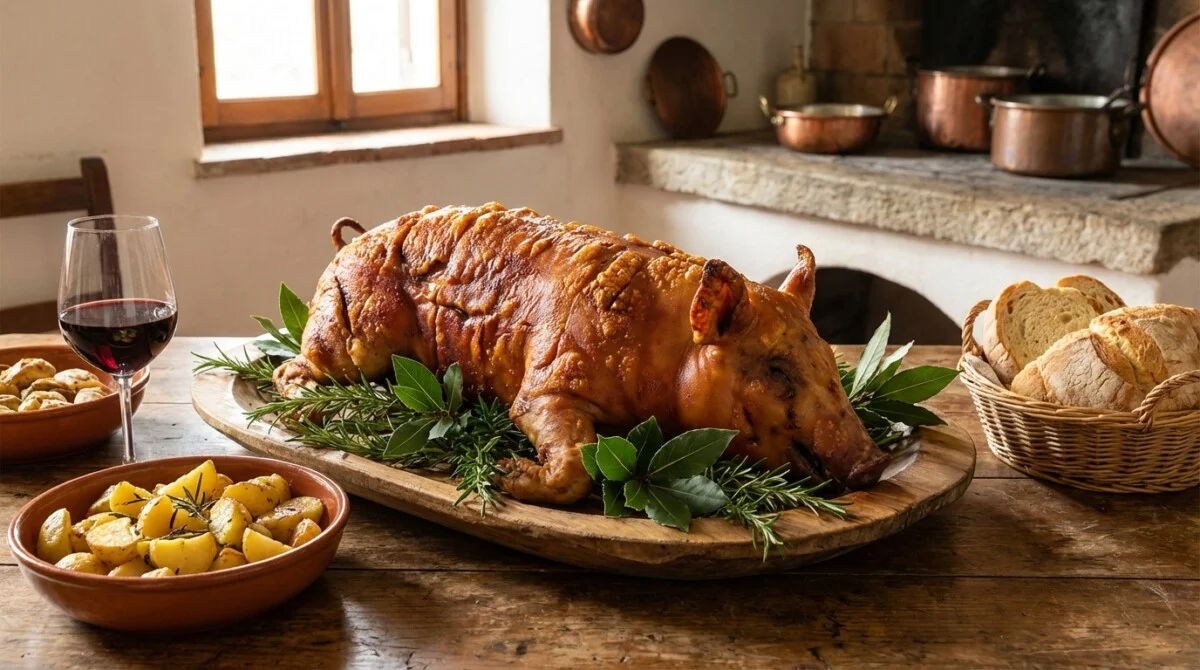
In one of my recent lessons, I was working with a student on traditional Italian food and ancient cooking methods. While I introduced her to porceddu sardo, she told me about the New England clam bake. That unexpected connection inspired this article — a cultural parallel between two distant populations, united by the same ancestral way of cooking food beneath the earth. And yes, I’m delighted to give credit to Regina for sparking this beautiful idea 😊.
Porceddu Sardo: An Ancient Ritual of Fire, Myrtle, and Pastoral Life
Among Italy’s most evocative culinary traditions, porceddu sardo holds a special place. More than a dish, it is a ritual — a gesture that unites shepherds, earth, fire, and the aromatic plants of the Mediterranean. In Sardinia, porceddu is not simply prepared; it is celebrated.
The origins of porceddu reach back to the Nuragic civilization, which flourished in Sardinia between 1800 and 500 BCE. Although the Nuragic people are best known for their stone towers, the nuraghi, their daily life was deeply tied to pastoralism, the land, and the rhythms of nature.

Many iconic Sardinian foods — porceddu, pane carasau, pecorino cheeses, spit‑roasted meats — descend directly from this ancient pastoral culture.
How Porceddu Was Traditionally Cooked
1. Choosing the Piglet Porceddu is made from a very young suckling pig, which ensures tender meat and a delicate flavor. It is cleaned, lightly salted, and perfumed with myrtle, the symbolic plant of Sardinia.
2. Cooking Underground: The Oldest Method
The most ancient and ritualistic way to cook porceddu is underground, a technique used by shepherds living far from villages.
The traditional process:
- A pit is dug into the earth.
- A large fire is lit inside the pit until the soil becomes scorching hot.
- The embers are removed.
- The piglet, often wrapped in myrtle, is placed inside.
- It is covered with embers, hot earth, and sometimes a stone slab.
- It cooks slowly for 2–3 hours.
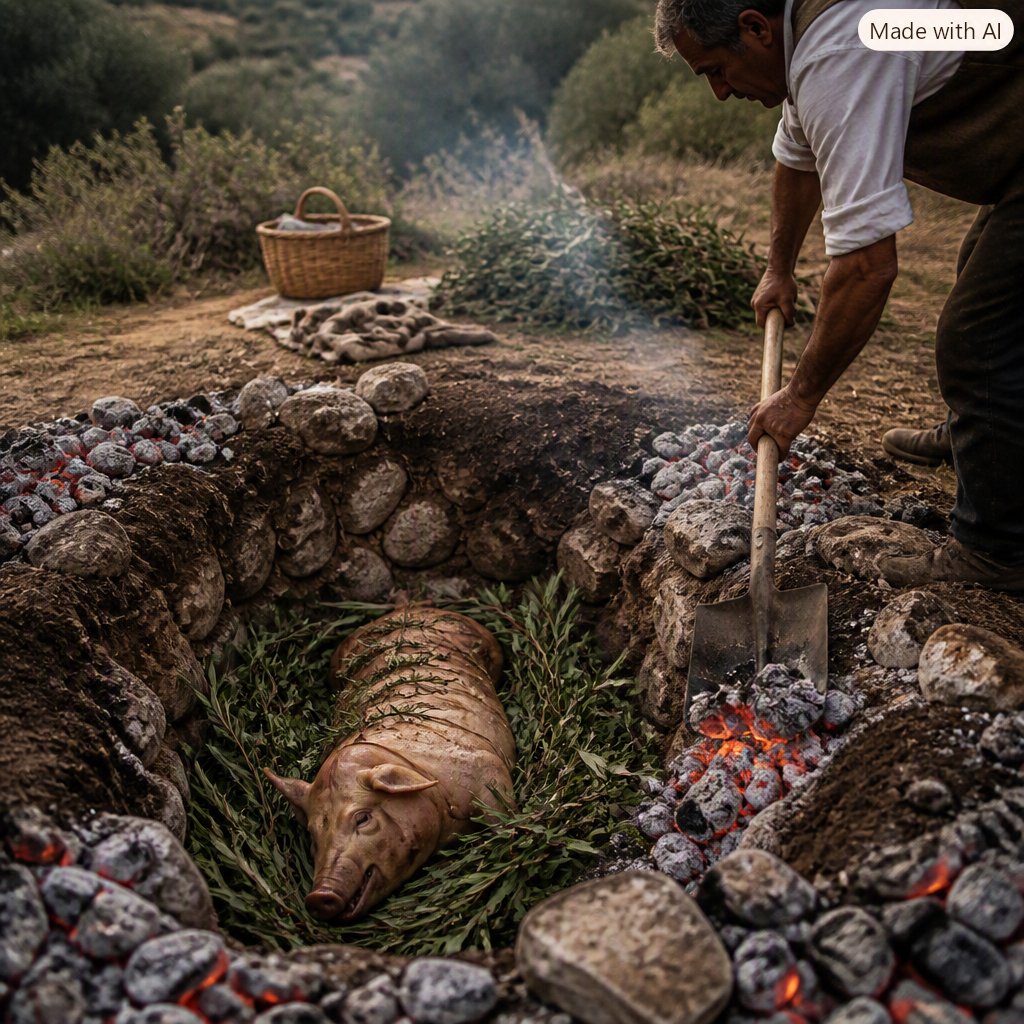
The result is extraordinary: meat that is tender, juicy, and aromatic, with a crackling that becomes crisp and golden.
This method mirrors other ancient Sardinian cooking techniques — including those used for pane carasau, sheep, and wild game — a cuisine born from fire, earth, and necessity.
3. Serving the Porceddu
Porceddu is traditionally served: on a bed of myrtle branches, cut into large pieces, with crisp, golden crackling, alongside pane carasau and Cannonau wine
Across the Ocean: The Clam Bake of New England
On the opposite side of the Atlantic, Native Americans — and later the settlers of New England — developed a remarkably similar technique: the clam bake, a communal ritual of cooking seafood underground on the beach.
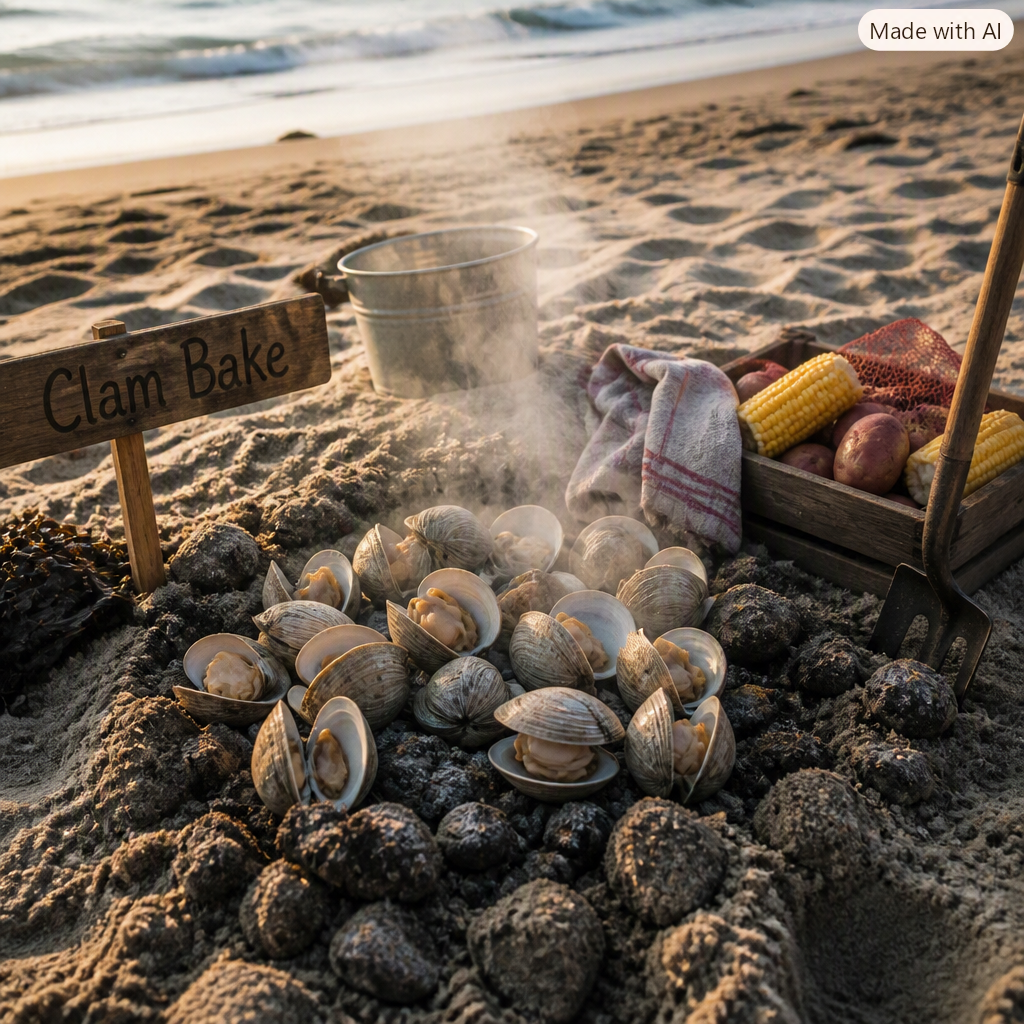
The process mirrors the Sardinian method: A pit is dug in the sand.A fire is lit and large stones are heated. The stones are covered with fresh seaweed (often kelp).Clams, lobsters, corn, and potatoes are added. Everything is covered with more seaweed and sand. The food cooks slowly with the steam of the sea.
Common Ancestral Wisdom
Despite the differences — meat vs. seafood, myrtle vs. seaweed, shepherds vs. fishermen — the two traditions have “Earth as a Natural Oven” in common: Sardinia uses soil and stone, New England uses sand and heated rocks.
The porceddu sardo and the New England clam bake show that even distant cultures may have ancient commonalities born from the relationship between people and their natural surroundings: fire, earth, aromatic plants, slow cooking are universal elements that are, in many ways, the basis of all good cooking.
Please contact me for a Free 20-minute Italian Consultation.
6 replies on “Fire, Earth, and Tradition: A Culinary Bridge Between Sardinia and New England”
Lea, these blogs are just amazing, so many interesting aspects of life & cultures!!!
Thank you :)))
Professoressa Lea, your Italian Spirit blogs are consistently enjoyable and enlightening. I have not yet enjoyed Sardinian porceddu sardo; but I have savored a New Jersey Shore clambake! Thank you for this latest blog on these two ancient methods of cooking -worlds apart! Buona sera, Ricardo.
Thank you, Richard. I just wanted to let you know that there is a spot available for you from 5:00 to 6:00 p.m. Just in case…. :)))))
I wasn’t familiar with the history, tradition and rituals connected to the “porceddu”. It’s amazing to me how Lea can find and share information so deeply embodied into the Italian heritage, yet unknown to most. Thank you for publishing this blog, accessible to anyone willing to get culturally enriched!
Thank you very much :)))))