
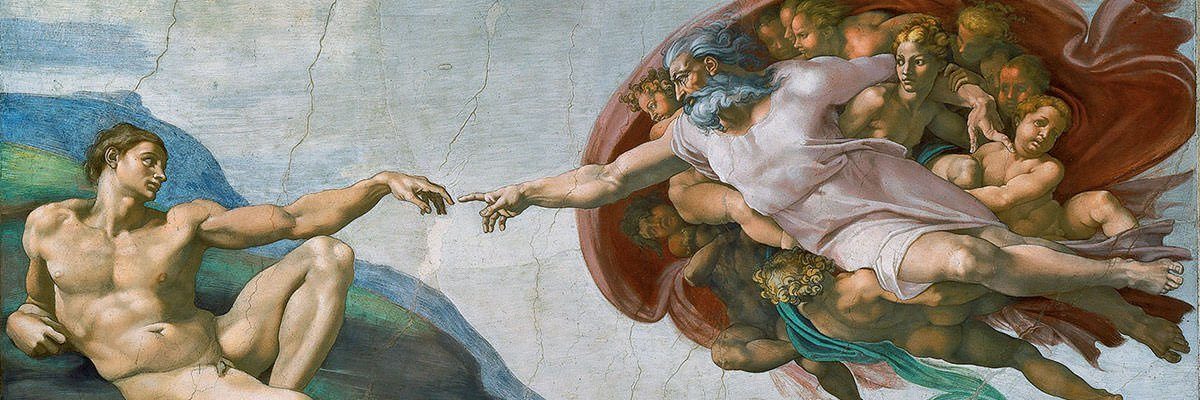
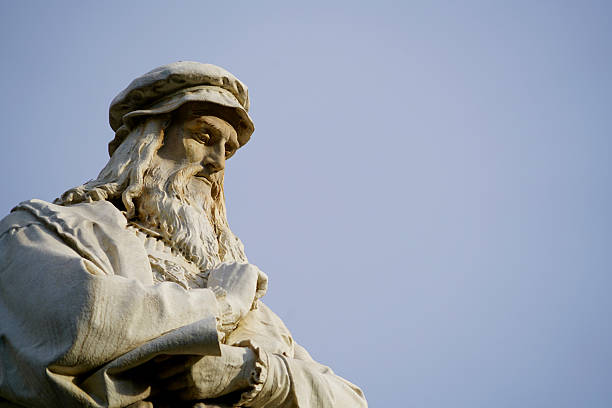
When people speak about the Italian Renaissance, they speak about greatness. They speak about Leonardo, Michelangelo, Brunelleschi, Alberti. They speak about painting, architecture, poetry, music, and thought. It was an age of change and creation, a rebirth of classical arts, science, and engineering.
But this raises a question: if the Renaissance was a rebirth, where were the women?
The Renaissance placed the human being at the center of the world, yet in practice that human being was usually male. The ideal of the age was the “universal man”: a man who could paint, write, design, and think. Humanism praised man as creator, thinker, and measure of all things. Women were rarely included in that vision.
This was not a contradiction for Renaissance society. The culture changed, but the social order did not. Society remained patriarchal, hierarchical, family-based, and religious. Women were still defined through marriage, motherhood, modesty, and obedience. Artistic freedom did not become female freedom.
The exclusion began at the root. Humanist education was largely closed to women. They were often denied access to Latin, formal study, and intellectual circles. Without education, it was difficult to enter the professions. In the visual arts, training took place in workshops, and workshops were male spaces. If women could not enter those spaces, they could not learn the craft in the same way as men.
Women were also restricted in public life. Their movement, speech, and presence were controlled. In this context, a woman was often seen less as a mind than as a body. She was admired, represented, and idealized, but not encouraged to create.
This is one of the central limits of the Renaissance. Women appeared everywhere in art, but mainly as images. They were portraits, allegories, saints, mythological figures, symbols of beauty, spring, virtue, or desire. They were present on the canvas, but rarely behind it. Their image was renewed, but their position was not.

For that reason, the Renaissance can be seen as an incomplete rebirth. It liberated many forms of expression, but it did not liberate women. It gave women visibility as subjects of representation, not authority as artistic subjects in their own right. Their beauty was praised, but not their creativity. Their presence increased in paintings, but not in signatures.
The idea behind this exclusion did not disappear with the Renaissance. It lasted for centuries. In a 1973 interview with Oriana Fallaci, Mohammad Reza Pahlavi dismissed the idea of equality between men and women in ability and asked why women had not produced a Michelangelo or a Bach. His words were modern, but the logic was old. They repeated a judgment shaped by centuries of exclusion: women were blamed for not producing greatness after being denied the means to do so.
And yet women did create, even if history treated them as exceptions. When women entered artistic or literary life, they often needed protection, family support, social status, or unusual circumstances. They were allowed through narrow doors, not welcomed as part of the system.
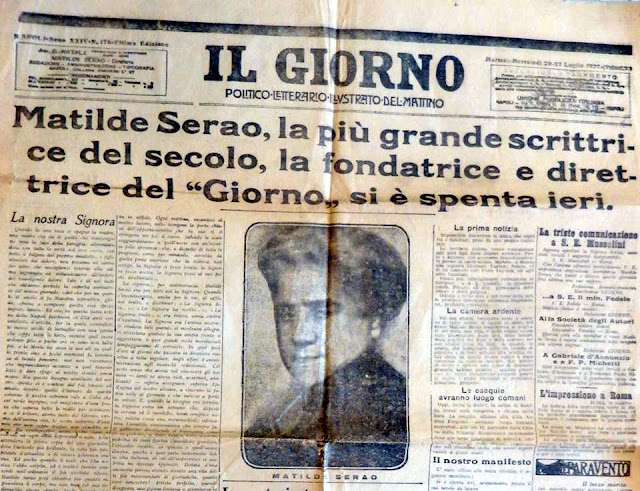
A fuller rebirth came much later. In Italy, women slowly began to appear not only as muses or symbols, but as authors. Maria Maddalena Morelli achieved fame in the eighteenth century and was crowned as a poet. In the nineteenth century, Matilde Serao became a major literary figure and the first woman to found and direct a daily newspaper in Italy, “Il Giorno”. Later, Grazia Deledda became the first Italian woman to win the Nobel Prize in Literature. With writers like these, women entered Italian cultural life as full creative subjects.
So the Renaissance remains a great age, but also a limited one. It changed art, thought, and the image of the human being. But it did not extend that change equally to women.
That is why the Renaissance, for all its brilliance, was still a male rebirth.
9 replies on “Why didn’t the Renaissance bring a rebirth for women in the arts?”
As history has taught us, behind a great man there is always an even greater woman…. so, even then, I am pretty sure women (though still suppressed) were pulling strings and doing awesome things which haven’t been passed down to us.
Thanks !))))))))))))))))))))
Important well written piece! Removes a common false datum about women
Thank you :))
Where would MAN be without the woMAN!
You are correct!
Molto interessante, non ci avevo mai pensato!
Thank you :))))
:)))))))