
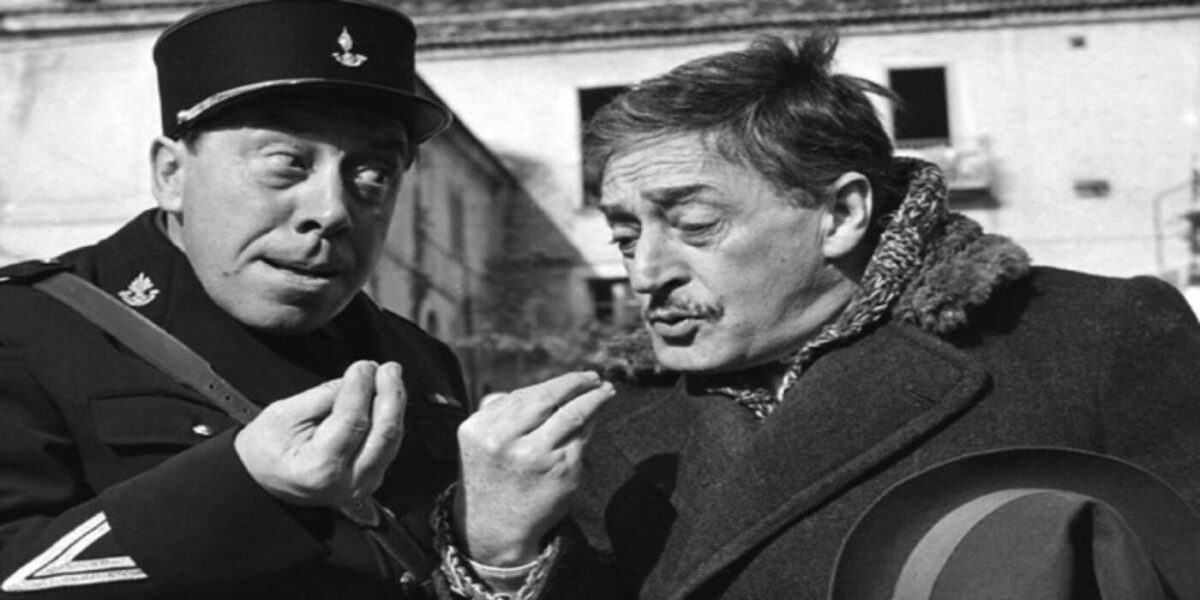
I want to take you on a small journey through something as quintessentially Italian as pasta or opera: the way we communicate.
In Italy, words are only the beginning. There are two other Italian languages that don’t involve words at all. One is the mix of gestures and expressions often thought of as “typically Italian” but seldom understood to be an actual language. The other, less well known, is a combination of invented sounds, musicality, and improvisation: the grammelot.
These two “secret” languages share a common root: the need to communicate without a shared spoken language.
The Language of Italian Gestures is a Universal Code
The language of gestures was born centuries ago, when Italy was divided into many states with completely different dialects. A Sicilian and a Lombard could not understand each other; a Venetian and a Pugliese spoke mutually incomprehensible dialects.
But the need for trade, negotiation, argument, and persuasion was ever present, so the hands began to speak. Italians developed a visual, immediate, theatrical form of communication, gestures that became a universal code, understood by everyone:
🤌 “What do you want?”,✋ “Wait!”,🤏 “Just a little.”
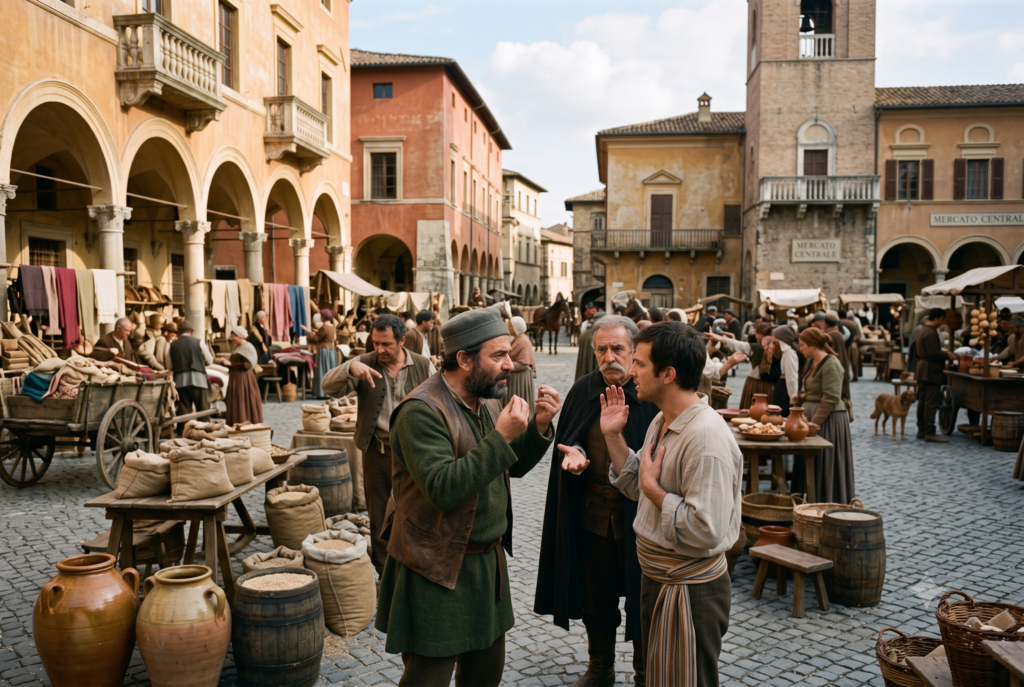
It was born of necessity, but it grew into a visual language full of emotion, humor, and personality, nourished by Italian creativity and emotional culture, an aspect of the Italian Spirit that everyone can relate to.
But we didn’t stop at gestures. We also created the grammelot, a “language” that doesn’t exist yet communicates anything and everything.
The Grammelot: a Language of Sounds but not Words
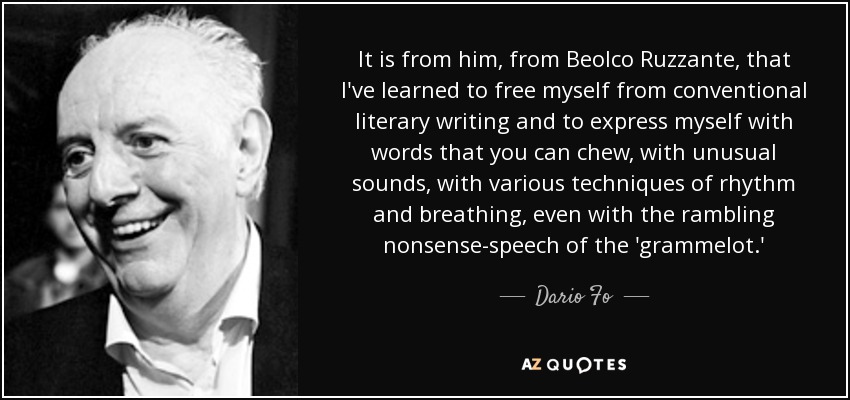
The grammelot is a very ancient theatrical technique that originated in the medieval Commedia dell’ Arte, was used by medieval jesters and traveling entertainers and later made famous by Dario Fo (a contemporary playwright and winner of the Nobel Prize for Literature in 1997).
It is a “language” made of invented sounds, rhythm, intonation, extravagant gestures, expressions, and fragments of dialect. It has no real words, yet it communicates perfectly, and it echoes the abbarruàrisi, the playful vocal calls of street vendors in Sicilian markets.
Imagine a medieval square. A jester jumps onto a wooden stage. He opens his mouth, and instead of words, a river of sounds pours out:
“Bràfa tirulì, zàpa zàpa, frulò!”
The crowd laughs, cries, understands everything, even though not a single real word has been spoken.
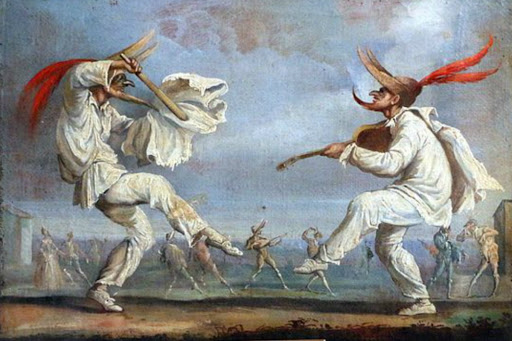
The grammelot was born for the same reason as the language of gestures: to communicate beyond linguistic barriers. An actor could travel across Italy or Europe and be understood by everyone without speaking their language. It is an instinctive, musical, physical form of communication that uses sound as emotion and gesture as grammar.
A Deep Connection Between Gestures and Grammelot
They are two different systems, but they share their origins in the human need to understand one other when words are not enough. Both are emotional languages, and they are profoundly Italian. This is why Italian conversation can sometimes feel like theatre. Words matter, yes — but the way we say them matters even more.
Theatricality, rhythm, expressiveness: these are part of Italian identity and creativity, because communication is not only words. It is rhythm, body, sound, intention. It is a bridge between people who want to understand each other, even when they don’t share the same language.
Italy Beyond Words
So today, I invite you to explore this part of Italy: the living, breathing language of gestures and sounds. Try a gesture. Play with a sound. Let your hands speak. Let your voice dance, because when you learn these languages, you don’t just “learn Italian,” you feel it.
And that is the true Italian Spirit.
2 replies on “Two other languages of Italy.”
Cara Professoressa Lea,
Molto Grazie for a delightful edition of “The Italian Spirit.”
I can truly identify with “The Language of Italian Gestures.” I learned only a few spoken Italian words from my mother – including “Va Napoli!” and “Chooch!” when my young brothers and I were up to mischief.
But I remember all my Mom’s hand gestures. They were loving, questioning… and sometimes angry! That sweet five-foot woman could be tough.
Thank you again for “The Italian Spirit”.
Buongiorno,
Ricardo
Grazie mille :))))))))))))))